

The $129 Ceramic Coating That's Making $2,000 Professional Coatings Pointless
Detailers don't want you to know about this — a small chemistry team just bottled the same ceramic coating shops charge thousands for, and it's flying off shelves.

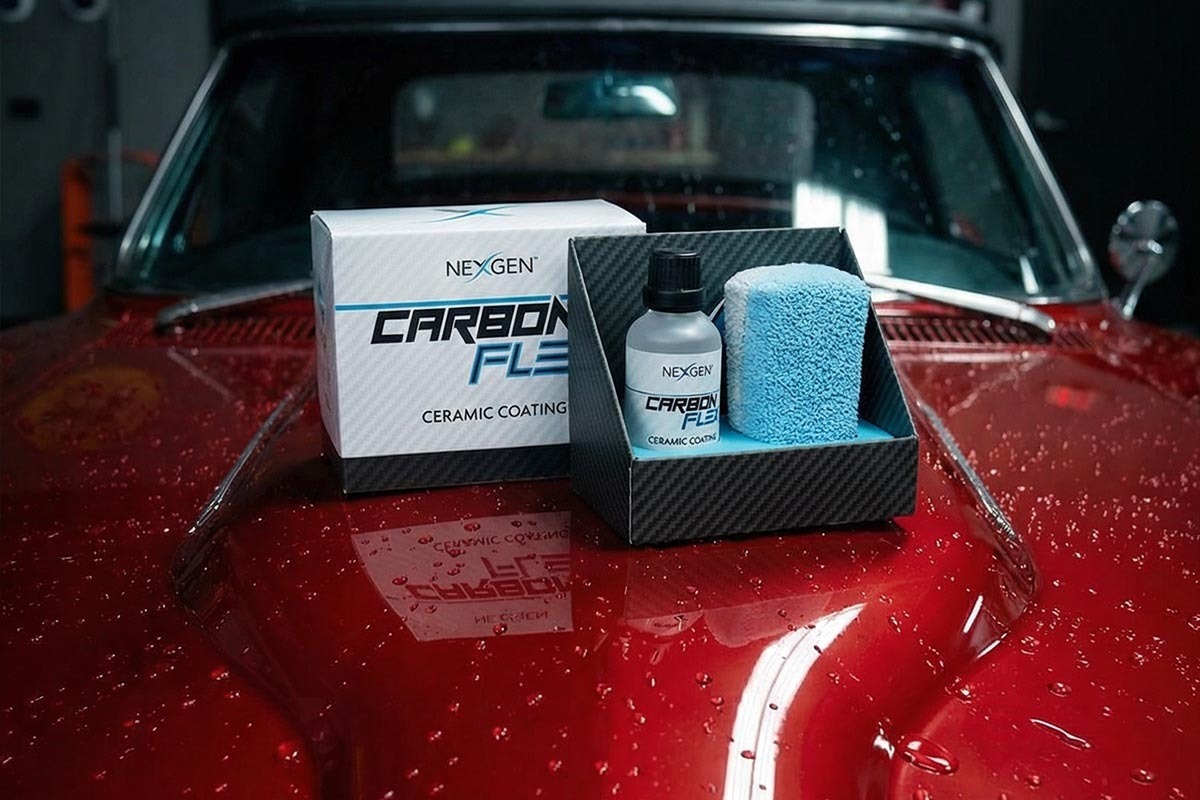
If you've ever priced out a real ceramic coating, you already know how the conversation goes. You drop your car off at a "certified" detailer for three to five days. You hand over somewhere between $1,500 and $2,500. You walk out with a glossy car and a printed warranty card you'll never read.
For about a decade, that was the only way to get true ceramic protection on your paint. Detailers built entire businesses on it — and they had every reason to keep it that way. They told you it had to be done in a climate-controlled bay. By a "certified" installer. With chemicals so volatile a regular car owner couldn't possibly handle them.
Then a small chemistry team out of the U.S. did something the detailing industry didn't see coming. They reformulated SiO₂ ceramic resin into a stabilized spray-and-wipe system — one tough enough to outlast most shop-applied coatings on the market, but easy enough that anyone with a microfiber towel can apply it.
They called it Carbon Flex. And early customers are quietly cancelling their detailer appointments.
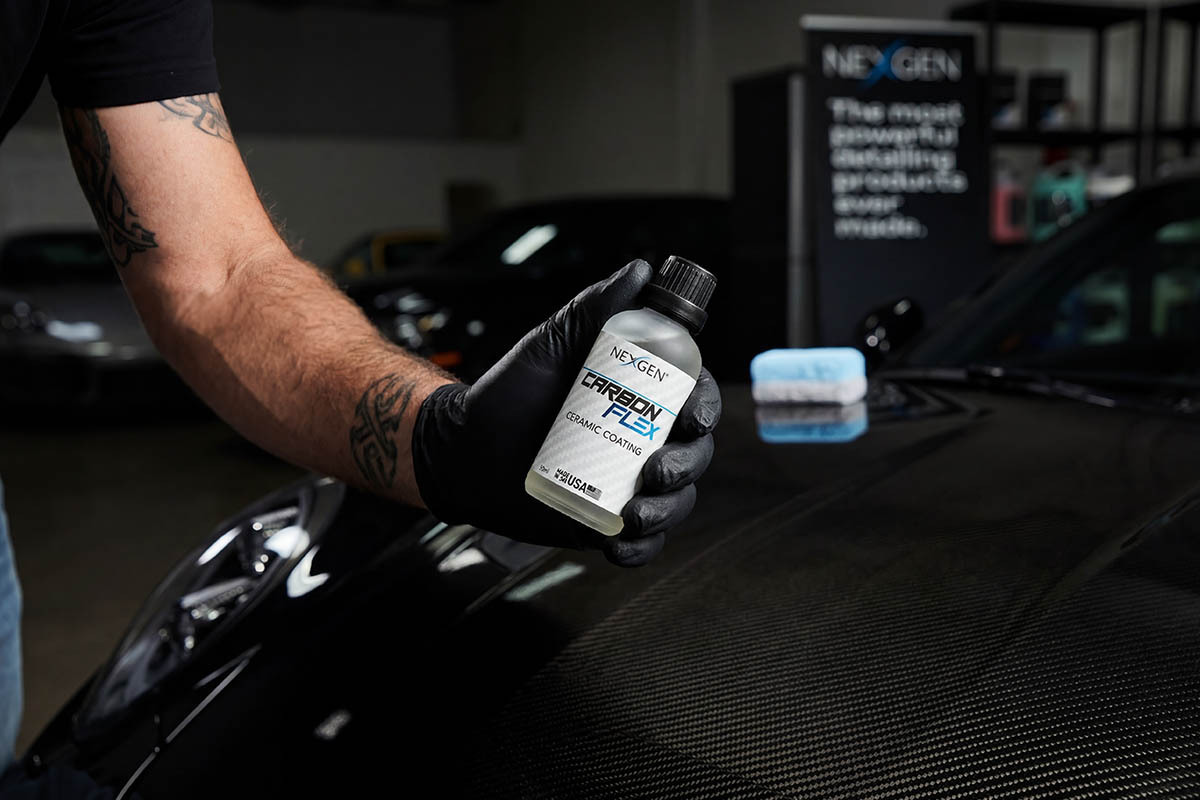
Carbon Flex's stabilized SiO₂ formulation — the same chemistry shops have been gatekeeping for a decade.
"I expected another spray sealant. This isn't that."
I first heard about Carbon Flex from a buddy who details cars on the side. He'd been quietly using it on customer vehicles for about three months and couldn't stop talking about it.
"I've applied dozens of professional coatings," he told me. "The cure feel under the towel is identical. I sold the rest of my pro kit."
The chemistry behind a $2,000 coating and a $129 bottle is closer than detailers want you to think. Carbon Flex didn't reinvent ceramic coating — they just stopped charging $2,000 for it. — Mike Thompson, independent detailer (15 years)
So I ordered a bottle. Coated my own car on a Saturday afternoon. Three months later, the paint still beads water like the first day, and I haven't touched a wax bottle since.
What I want to do in this article is explain why this is possible — because most people, including me a few months ago, assume "DIY ceramic coatings" are a watered-down gimmick. They aren't anymore.
Why detailers charge $2,000 in the first place
Here's the part the detailing industry doesn't advertise: the actual chemistry inside a $2,000 shop coating costs the detailer about $40–$80 per bottle. One bottle does several cars.
The other $1,900 you pay is going to:
- Labor — three to five days of paint correction, prep, and application
- The booking premium — a calendar slot in a backed-up shop
- The "installer network" — most premium ceramic brands only sell to certified shops, not consumers
- The warranty card — usually voided the first time you machine-wash the car anyway
That last one is the kicker. The trade-protected installer network is the entire reason ceramic coating stayed expensive. Premium brands refused to sell to regular consumers because their certified shops would lose business.
Carbon Flex's chemistry team came from inside that ecosystem. They knew exactly what was in the $2,000 bottles. So they built their own — and just sold it directly.
The full Carbon Flex application — start to bead test — in under 90 seconds.
How Carbon Flex actually works
Carbon Flex isn't a "wax that pretends to be ceramic." It's a true SiO₂ ceramic resin in a stabilized carrier. The second it touches your clearcoat, it cross-links and begins forming a glass-hard shell — the same way a shop coating does.
The whole process takes about 90 minutes for a full vehicle:
Step 1. Wash and dry your car. That's the only prep. No claybar required (though it helps for older paint), no machine polishing, no panel-wipe with IPA.
Step 2. Spray Carbon Flex onto the included applicator pad. Wipe one panel at a time in straight, overlapping lines. The formula has a 3-minute working window — long enough that first-timers don't panic, short enough that it cures cleanly.
Step 3. Buff the residue off with a clean microfiber. You'll feel the surface tighten and slick out as the resin bonds. Move to the next panel.
Step 4. Walk away. The coating fully hardens in about two hours. Don't get it wet for 24.
That's it. No climate-controlled bay. No certified installer. No appointment.
Carbon Flex vs. a $2,000 shop coating — by the numbers
I'm not going to pretend a $129 bottle is identical to a top-shelf shop installation. There's a reason a paint-corrected, polished, multi-layer pro coating exists. But here's where things actually land when you compare the specs:
| Spec | Carbon Flex | Pro Shop Coating |
|---|---|---|
| Hardness rating | 9H | 9H |
| Durability | 3+ years | 2–5 years |
| Time to apply | ~90 min | 3–5 days |
| Cost (full vehicle) | $129 | $1,500–$2,500 |
| Chemical resistance | pH 2–12 | pH 3–11 |
Translation: you're paying the detailer for labor and a printed certificate. The chemistry inside the bottle does the actual work — and that chemistry is now sitting in a $129 spray bottle on Carbon Flex's shelf.
What real customers are saying
I went looking for unfiltered customer reviews — not the cherry-picked ones on the brand's site. The pattern across forums, Reddit threads, and detailing groups is consistent. People expected another "spray sealant" rebrand. They got something that actually performs.
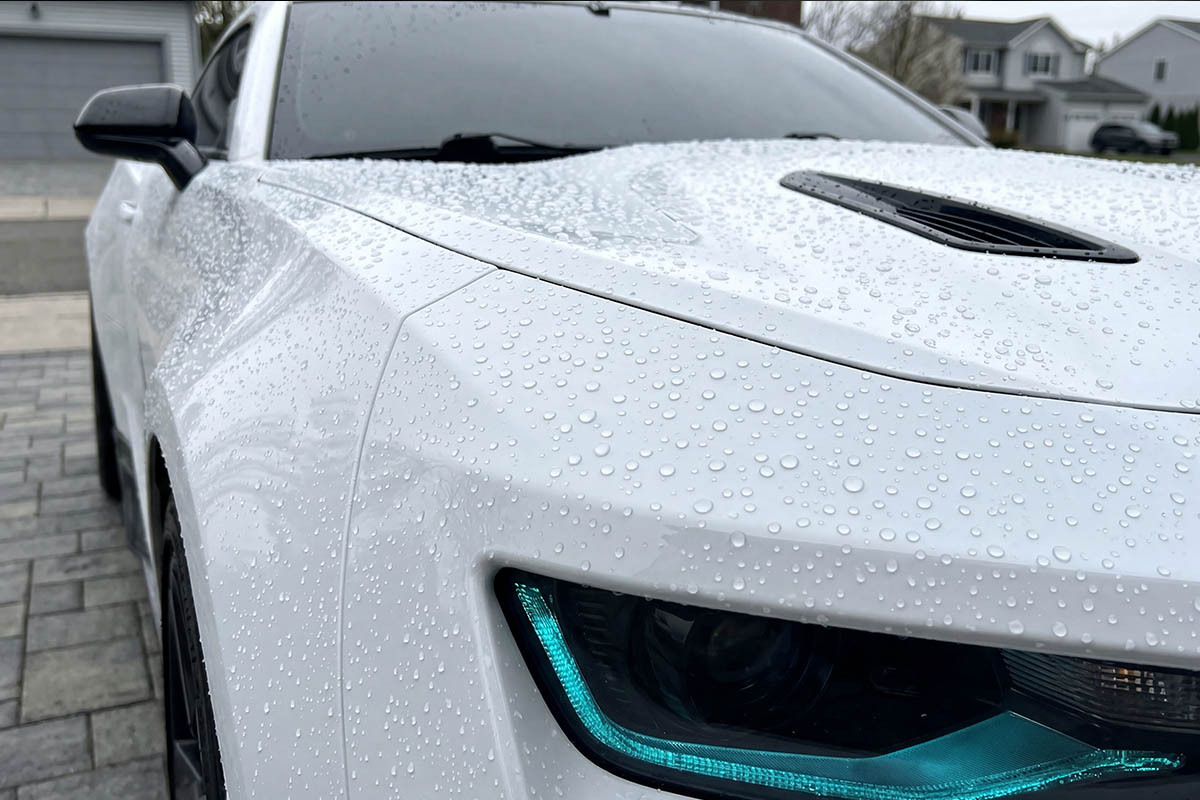
"David K. — 2016 Chevy Camaro. Six months after applying Carbon Flex."
David K., a Tacoma owner from Denver, told me he had a quote from a local shop for $1,800. He tried Carbon Flex instead. "Six months later, water still beads like the first day. The shop guy was annoyed when I told him."
Janelle M., who described herself as "not a car person," said hers was "the easiest product I've ever used — sprayed it on, wiped it off, done." Her black Honda Accord, she said, is glossier than her husband's truck — which he paid $1,500 to ceramic-coat last year. "He's not happy about it."
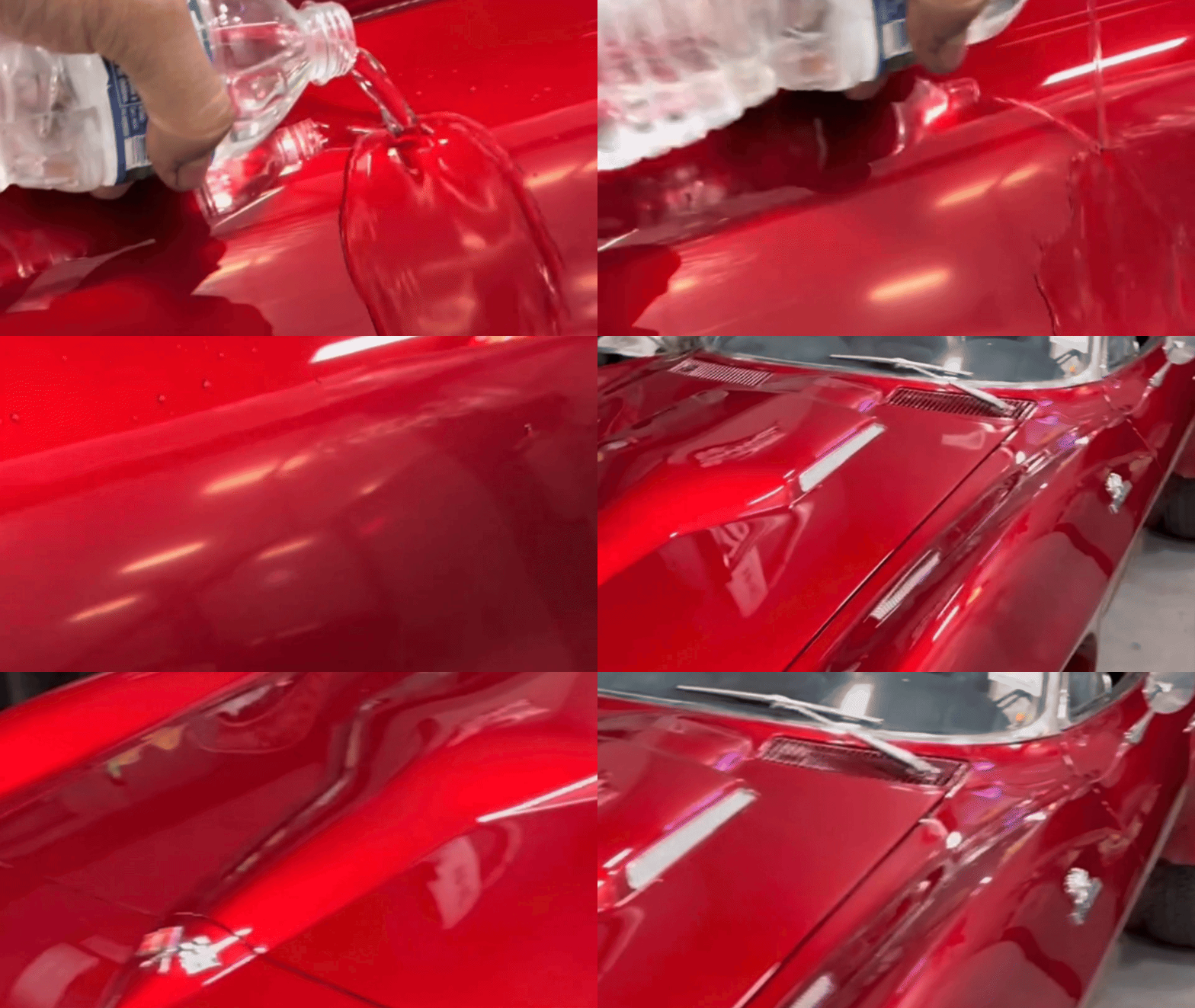
The five-gallon bucket test — three months after a single Carbon Flex application.
"But isn't a DIY ceramic coating just a fancy wax?"
This was my first question too. So I asked Carbon Flex's product team to explain the actual chemistry difference.
A spray wax is organic — it dissolves in 6 to 8 weeks. A polymer sealant lasts 3 to 6 months. Both sit on top of your clearcoat as a sacrificial layer.
A true ceramic coating like Carbon Flex is a silica-based resin that cross-links chemically with your clearcoat to form a glass-hard shell. That's the whole game — that's why pro coatings have been worth the money for the last decade. Carbon Flex is the same category of chemistry, just bottled for non-pros.
The only meaningful difference between Carbon Flex and a top-shelf pro coating is the prep work the detailer does before applying it: paint correction, machine polishing, panel decontamination. That work is real. But it's also work you can choose to do yourself — or skip entirely if your paint is already in good shape.
The catch
There has to be one, right?
Here's the honest version. Carbon Flex won't fix paint that's already damaged. If your clearcoat is swirled, scratched, or oxidized, the coating will lock those defects in. You either need to polish first, or accept the paint as it is.
The other catch: they're running out of stock faster than they can manufacture. The 25% off promotion ends as soon as the current production batch sells through. After that, it goes back to full price — assuming they have any left.
If you've ever looked at a $2,000 ceramic coating quote and walked away, this is the closest you'll get to the same chemistry without paying the detailer markup.
Where to get it
Carbon Flex is only sold through the official Nexgen site — they pulled it from Amazon last year because of counterfeit listings. Right now, the official site is running a 25% off promotion that brings a full-vehicle kit down to $129 from $172.
Use code FLEX25 at checkout (auto-applies through the link below). Free shipping on orders over $99, and there's a 30-day money-back guarantee — if it doesn't outperform whatever wax or sealant you're using now, they refund you, even if the bottle's half empty.
Update (April 27, 2026): Since this article was first published, Carbon Flex has confirmed they are extending the 25% off code through the end of the week due to high demand. After that, pricing returns to $172 per kit.
1,247 Comments